
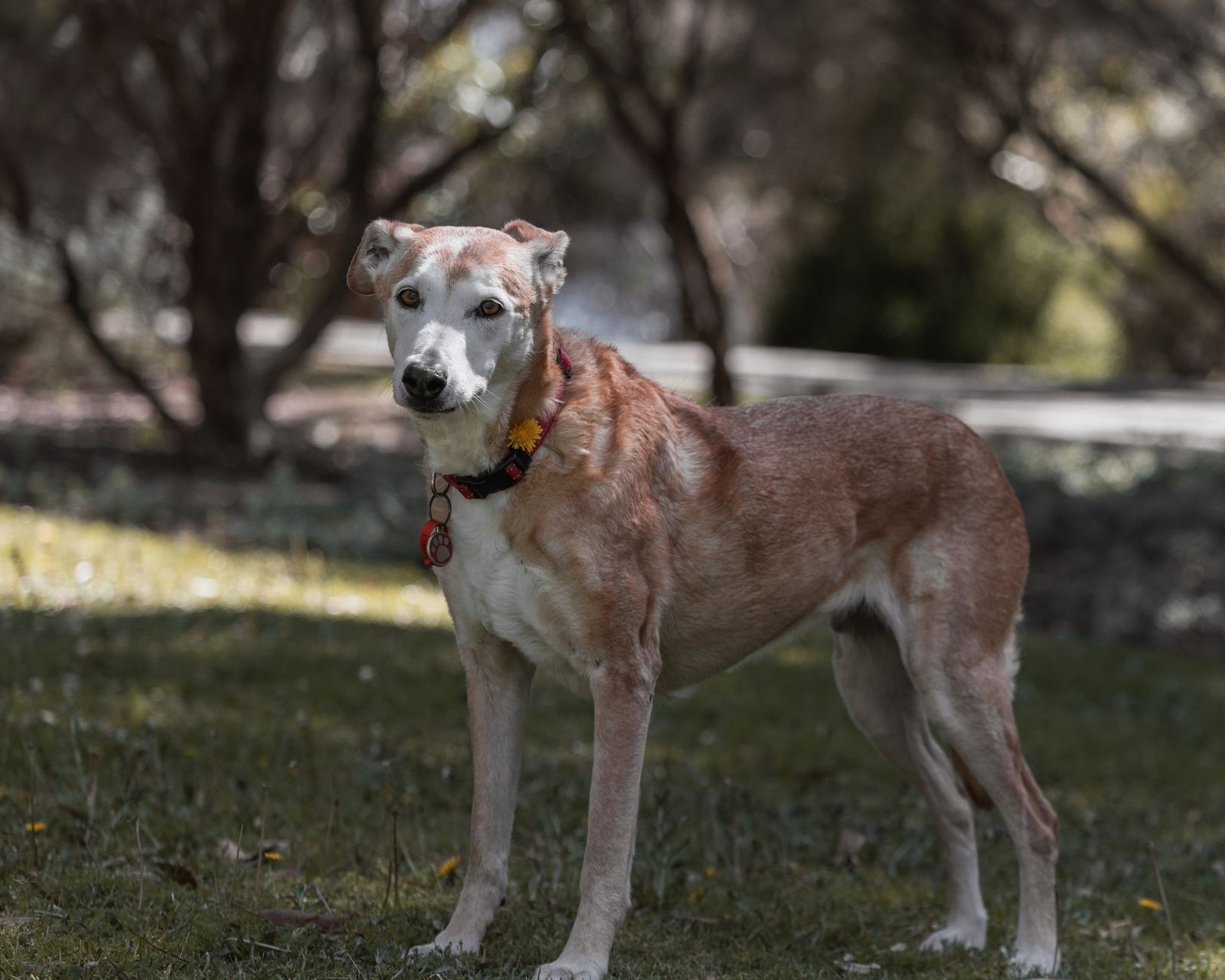
Arthritis is common in older dogs and cats, and it rarely looks dramatic. Dogs get slower to rise, hesitate at stairs or the car, and lag on walks. Cats stop jumping to favourite perches, miss the litter box, and groom less. These are signs that warrant a veterinary exam, not simply proof that your pet is getting old.
Why stiffness gets more obvious as Langley turns cool and damp
Late August into September changes the routine for almost every pet in the Fraser Valley. Evenings cool off, the rain comes back, and the long summer outings give way to shorter, less frequent ones. A dog who moved comfortably through July can look noticeably creaky by the first properly wet week of the fall.
Some of that is the weather. Owners consistently report that a stiff pet is stiffer on a cold, damp morning, and this is the time of year veterinary teams hear about it most. The arthritis was almost always there through the summer. The change in season is what made it visible.
The rest is activity and weight. A dog who walked twice a day in July and now walks once, in the dark, loses muscle around the sore joints, and less muscle support means more discomfort doing the same things. Body weight tends to creep up across the same few weeks. Those two changes feed each other, which is why so many mobility conversations start in early autumn.
The mistake nearly every owner makes: reading pain as age
Osteoarthritis is a degenerative joint condition, and it is badly under-recognized in pets for one plain reason. It looks like getting old. “She is just slowing down” and “he is an old man now” are the two sentences we hear most, and both usually describe an animal who is uncomfortable rather than one who is merely older.
Age is not a disease, and slowing down is not a diagnosis. When a pet starts doing less, the honest question is whether something hurts. That question gets answered by a physical exam, not by a birthday.
What arthritis looks like in dogs
Dogs give away more than cats do, though the signs are still easy to explain away. Things worth writing down:
- Slower to get up, particularly off a hard floor or after a long sleep
- Stiff for the first few minutes after rest, then loosening as they move around
- Sore the day after a big walk or a weekend hike rather than during it
- Hesitating at a staircase, or taking it one step at a time
- Needing a run-up to jump into the car, or refusing the jump altogether
- Falling behind on walks, or turning for home earlier than they used to
- Licking or chewing at one spot repeatedly, often a wrist, elbow or knee
- Sitting lopsided, standing with the back legs unusually close together, or shifting weight off one limb
- A shift in behaviour: grumbling when touched, less patience with a puppy or a toddler, new resistance to being lifted
That last point gets missed constantly. Irritability in an older dog is very often pain talking, not a personality change, and owners who mention it almost always apologize for raising something they think is trivial. It is not trivial. It is frequently the most useful thing you can tell your veterinarian.
What arthritis looks like in cats, which is close to nothing
Cats are the harder half of this. They seldom limp, they rarely vocalize, and they compensate so smoothly that a household can miss it for years. Feline arthritis shows up as changed habits instead of obvious lameness, and the elbows, hips and spine are common sites. Watch for:
- No longer jumping to a favourite perch, or settling for a lower one
- Gathering and hesitating before a jump instead of going straight up
- Going up fine but coming down badly, in a controlled slide or a heavy thump
- Using a chair or a box as a staircase to reach a spot they once took in one leap
- Accidents beside the litter box, because climbing over a high side now hurts
- A scruffy, greasy or matted coat over the back and hips, since grooming there means twisting
- Overgrooming one particular area, sometimes down to bare skin
- Sleeping more, hiding more, or quietly withdrawing from the family
- Less tolerance for brushing, handling or being picked up
Litter box trouble in a senior cat gets labelled a behaviour problem or a urinary problem far too readily. Sometimes it genuinely is one of those, which is exactly why it needs assessing. But a sore spine and a tall-sided box is a combination that is easy to overlook and often straightforward to improve.
Why the signs come and go
Arthritis fluctuates, and that fluctuation is the reason so many pets wait too long for an exam. There are good days and bad days, better weeks and worse ones, and a pet who struggled on Sunday can trot into the clinic on Wednesday looking perfectly fine. Many owners wait for the problem to become consistent before booking, and consistency arrives late.
The most helpful thing you can bring is evidence from home. A short phone video of your dog rising from the kitchen floor, or your cat approaching the counter, shows a veterinarian something a ten-minute exam in an unfamiliar room may not reproduce. A rough note of which days were bad and what your pet had been doing beforehand is just as valuable.
Sudden or shifting lameness is a different problem
Degenerative arthritis builds over months and years, tends to be worse after rest and easier once a pet warms up, and usually troubles the same joints over time. Lameness with a different shape deserves a different response. A limp that appears out of nowhere, or one that migrates from leg to leg across a few days, is not the arthritis pattern.
Sudden or shifting lameness can point to injury, joint infection, or a tick-borne illness, and our guide to Lyme disease prevention for dogs in Willoughby covers that side of things. A limb your dog will not put weight on, a hot or swollen joint, a sudden yelp, or a pet who is also off their food should be looked at promptly through our urgent care service during clinic hours instead of monitored at home.
Pain control is a plan, not a single product
Owners often hope for one thing that fixes it. Comfortable arthritis management is layered instead, and several of the layers cost nothing but attention.
Body condition does more than anything else. Every extra kilogram travels through joints that are already sore, and excess weight also drives inflammation throughout the body. Trimming a pet back to a healthy body condition reliably improves how they move, and it is the single highest-impact lever an owner controls. Our team scores body condition at every visit and builds a realistic plan through weight management, with rechecks so you can see whether it is working. If you are rethinking what goes in the bowl, our post on choosing the right food for your dog or cat is a good starting point.
Consistent, moderate exercise beats the weekend blowout. Arthritic joints do better with regular, predictable movement than with rest punctuated by a two-hour Saturday hike. Two shorter daily walks usually suit a stiff dog better than one long one. Cats need the equivalent: short, low, gentle play sessions that keep muscle on without asking for big leaps.
Home modifications remove the moments that hurt. Many houses and townhomes around Willoughby and Latimer have stairs between levels and hard vinyl plank or laminate through the main floor, which is a difficult surface for a dog with sore hips. Practical changes:
- Runners, yoga mats or rugs along the routes your pet uses most, especially at the bottom of stairs and around food bowls
- A ramp or a set of steps for the car, the couch or the bed, introduced slowly with treats
- A litter box with one low entry side, placed where your cat does not have to climb or descend stairs to reach it
- Slightly raised food and water bowls so a stiff neck and elbows are not loaded at every meal
- A supportive, well-padded bed in a warm spot out of the draft, away from the door in wet weather
- Perches your cat can still reach, using a stool or a box as an intermediate step
Traction is part of the plan. Long nails change how a paw meets the floor and add strain to already sore joints, and a pet who is hesitant on smooth flooring often improves once the nails are back to a sensible length. For pets who find handling painful or frightening, we offer sedated nail trims and veterinarian-supervised grooming, which also helps the older cat whose coat has become matted over the hips.
Veterinary pain management is the medical layer. Chronic joint pain is assessed and managed through our pain management service, where a veterinarian examines your pet, discusses the options that suit their age and organ health, and monitors the response over time. What is appropriate varies enormously between a nine-year-old Labrador and a fifteen-year-old cat with kidney changes, which is why this belongs in a consultation rather than a blog post.
Human pain medicine is never an option at home
This one matters enough to say plainly. Do not give your dog or cat any pain reliever from your own medicine cabinet, including anything you have used safely yourself, and do not give a leftover medicine from another pet in the house. Common human pain and anti-inflammatory products can cause severe damage to the stomach, kidneys, liver or red blood cells in pets, and cats are especially vulnerable because of how differently they process these compounds. Doses that seem tiny to us are not tiny to a cat. If your pet is uncomfortable tonight, phone us instead at (236) 473-0375, or reach an emergency hospital outside our hours.
What a veterinary exam sorts out
An exam is what separates arthritis from the other things that look like it. A veterinarian watches your pet move, then works through each limb by hand, checking range of motion, joint thickening, muscle loss and which specific joints produce a reaction. Much of the useful information comes from that hands-on assessment.
Where more detail is needed, our in-house diagnostics include digital X-ray to look at the joints and spine, and bloodwork to check organ function before any long-term plan is put in place. That step matters as much as the joint findings, since it shapes what a pet can safely be given.
Several conditions mimic arthritis or sit alongside it: cruciate ligament injury, hip or elbow dysplasia, spinal disease, soft tissue injury, dental pain in a cat who has stopped grooming, thyroid changes, and occasionally something more serious. For pets aged seven and up, senior wellness exams every six months are how these get caught while there is still plenty of room to help.
Frequently asked questions
How do I know if my dog has arthritis or is just getting older?
You cannot reliably tell them apart at home, which is precisely the problem. Healthy aging slows a dog down gradually and evenly, while arthritis produces specific patterns: stiffness after rest that eases with movement, reluctance at stairs and jumps, soreness the day after activity, and irritability when touched. If any of those sound familiar, book an exam and describe exactly what you have seen.
Do cats really get arthritis?
Yes, and it is common in older cats, but they show it through behaviour rather than limping. The clearest early clue is a change in vertical movement: a cat who stops jumping to a favourite perch, hesitates before leaping, or comes down awkwardly. Litter box accidents, a neglected coat over the back, and new hiding all belong on the same list.
Can I give my dog something for the pain until we can get in?
No. Nothing from a human medicine cabinet is safe to give a dog or cat, and products intended for one pet should never be shared with another. Keep your pet quiet and warm, avoid stairs and jumping, and call us at (236) 473-0375 so we can advise you properly or fit you in during clinic hours.
Why does my pet seem worse when the weather turns wet?
Cool, damp conditions are a common trigger for owners noticing more stiffness, and Fraser Valley autumns supply plenty of both. Reduced daylight and shorter walks compound it, since lost muscle around a joint means less support. Keeping the routine steady through the fall, rather than dropping it, usually helps more than owners expect.
Is my older pet too old for anything to be done?
No. Age itself is not a barrier to being made more comfortable, and much of what helps most is not a medicine at all: body condition, sensible exercise, traction underfoot, and removing the jumps and climbs that hurt. A veterinarian will tailor the medical part around your pet’s age, organ function and other conditions.
Book a mobility check at Latimer Animal Hospital
If your dog has gone quiet on the stairs, or your cat has stopped using the top of the bookshelf, that is worth twenty minutes of a veterinarian’s attention before the wet season sets in. Reach our team on 76 Avenue at (236) 473-0375, or arrange a senior wellness visit online, and we will work through what your pet is showing you at home.
Published by the team at Latimer Animal Hospital.
Educational content only. Nothing written here replaces a hands-on veterinary examination, diagnosis or treatment plan for your individual pet. A concern that cannot wait belongs with Latimer Animal Hospital by phone during clinic hours, or with a 24 hour emergency veterinary hospital at any other time.
Latimer Animal Hospital
19885 76 Ave Unit 215, Langley Twp, BC V2Y 4M5, Canada
Phone: +1 (236) 473-0375
Hours: Monday to Saturday 8:00 AM to 8:00 PM
Sunday and Statutory Holidays: 8:00 AM to 6:00 PM