
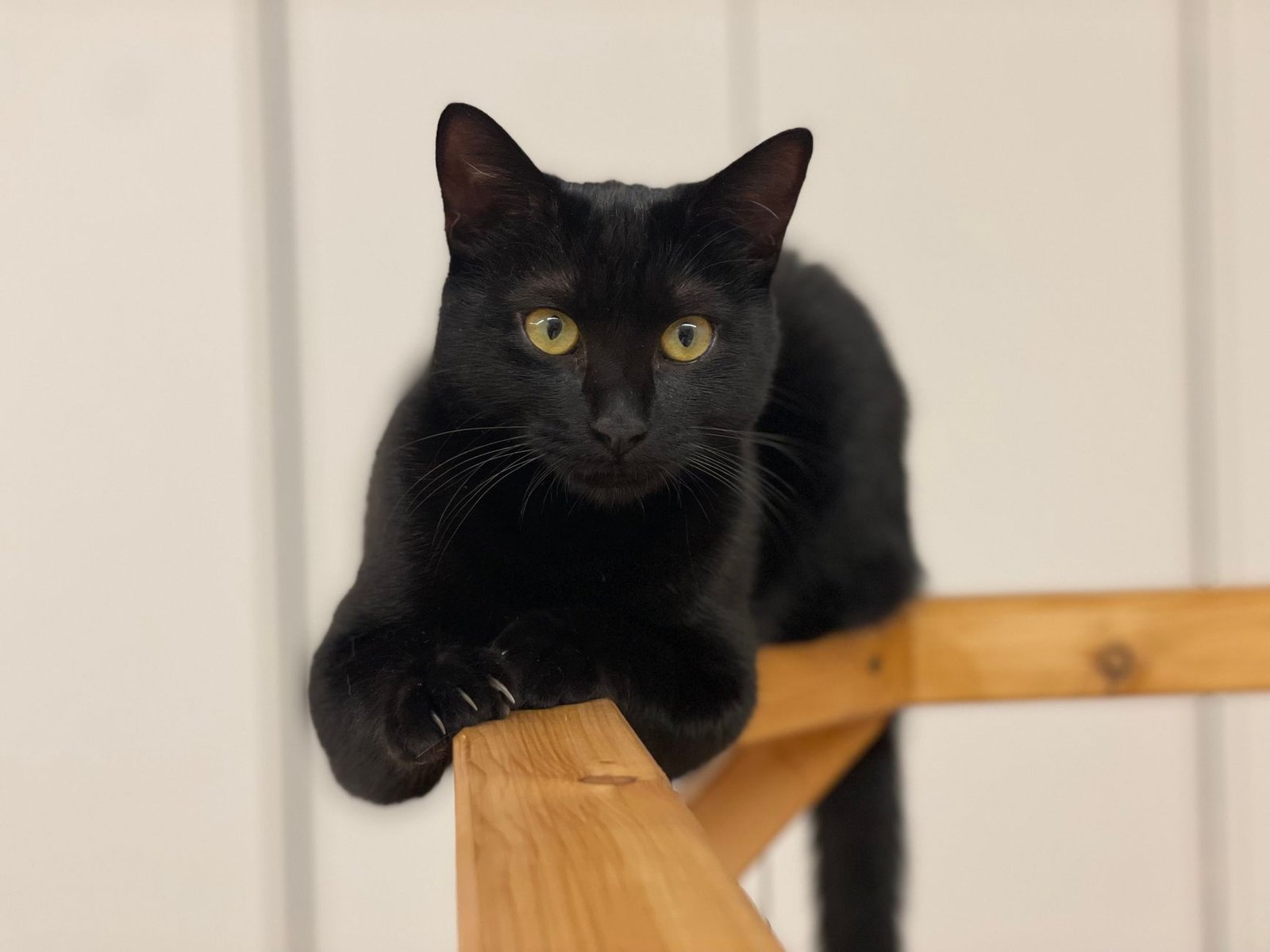
Hairballs are so established as a fact of cat ownership that most owners never think to ask whether the number is reasonable. It is a fair question, and the answer surprises people: an occasional one is ordinary, and a regular one is usually a sign of something worth looking into.
Where they come from
A cat’s tongue is covered in backward-facing hooks that are extremely good at pulling loose hair out of the coat. That hair has nowhere to go but down. Most of it passes through and leaves in the stool without anyone noticing.
A hairball happens when enough hair collects in the stomach to form a mass that cannot move on, and the cat brings it up instead. The familiar cylindrical shape comes from the shape of the food pipe on the way back out, which is why they rarely look like balls at all.
So a hairball is not a disorder in itself. It is the system working as a backstop. The question is how often that backstop is needed.
It helps to know that swallowing hair is not the problem in itself. A cat’s tongue is covered in backward-facing barbs that strip loose hair out of the coat on every pass, and all of it goes down. In a cat whose gut is moving normally, that hair leaves in the stool and you never see it. So the question is almost never whether your cat is swallowing hair. It is whether the volume going in has risen, or whether the passage out has slowed, and those are two different problems with two different answers.
Where the line sits
A cat producing a hairball every month or two, particularly a long-haired cat in a heavy shedding period, is not unusual.
Worth looking into: more than about one a month as a steady pattern, a sudden increase, or hairballs in a cat who never used to produce them. And always worth a visit if there is retching that does not produce anything, repeated attempts over a day, a cat who is off their food, constipation, or weight loss.
That last group matters because an unproductive retch looks very like a hairball attempt and can mean something quite different, and because a hair mass that will not move on is an uncommon but real problem rather than a nuisance.
What a rising count usually means
- More hair going in. A heavy coat, a shedding season, or an older cat whose loose hair is not being removed by brushing.
- More grooming than usual, which is the one most often missed. A cat who is itchy, whether from fleas, skin irritation or an allergy, grooms more, swallows more hair, and produces more hairballs. The hairballs are the symptom; the itch is the cause.
- Over-grooming from stress, which does the same thing by a different route.
- Gut motility. If hair is not moving through as efficiently as it should, less of it leaves the ordinary way. This becomes more likely with age.
- Coat type. Persians, Maine Coons and other long-haired cats genuinely produce more, which raises the baseline rather than the concern.
The useful insight is that most hairball problems are really grooming problems or skin problems wearing a different hat.
What actually reduces them
- Brushing, which is the single most effective thing. Hair in the brush is hair that is not in the cat. Daily for long coats, a few times a week for short ones.
- Keep parasite control going year round. An itchy cat grooms more, and fleas do not take the winter off indoors.
- Water intake, which helps everything move through. Wet food, more bowls, away from the food.
- Deal with the itch rather than the hairball if there is one. This is where most of the real progress comes from.
- Play and enrichment for cats whose grooming has a stress component.
- Ask us before using any over-the-counter remedy, because they are not all suitable for every cat and some are not helpful at all.
Our medical services cover the examination behind a cat whose hairballs have increased, including the skin and the gut rather than just the hair. In-house diagnostics are how we check an older cat for the conditions that change grooming and appetite, and our medical grooming service covers the cats whose coats genuinely need help and who will not accept it at home. Nutrition counselling is worth raising where diet is part of the plan.
Our hours
We are open Monday to Saturday from 8:00 am to 8:00 pm and Sunday and statutory holidays from 8:00 am to 6:00 pm, so there is a slot every day including holidays.
Hairballs are an ordinary appointment. A cat who is retching repeatedly without producing anything, who has stopped eating, who is vomiting more than a couple of times in a day, or who is lethargic should be seen the same day rather than watched. If that happens when we are closed, go to an open emergency hospital rather than waiting.
Common questions
Is a hairball once a week normal?
That is more than we would expect and worth a conversation, particularly if it is new.
Do short-haired cats get them?
Yes, less often. A short-haired cat producing them regularly is more interesting than a Persian doing the same.
Is vomiting food the same thing?
No, and the distinction matters. Bringing up food with no hair in it is a different problem and worth describing accurately when you call.
Do hairball foods work?
Some help by increasing fibre and improving transit. They work best alongside brushing rather than instead of it.
My cat retches but nothing comes up.
Worth an appointment. Unproductive retching has a longer list behind it than hairballs, and some of that list is time-sensitive.
Speak to the team at Latimer Animal Hospital
Count how many your cat has produced in the last month. If it is more than one, book a visit and start brushing daily in the meantime.
Published by the team at Latimer Animal Hospital.
This article is for general educational purposes only and is not a substitute for an in-person veterinary examination or advice about your individual pet. If you have an urgent concern about your pet, contact Latimer Animal Hospital or your nearest emergency veterinary hospital right away.
Latimer Animal Hospital
19885 76 Avenue, Unit 215, Langley, BC V2Y 4M5 (Willoughby)
Phone: (236) 473-0375
Hours: Monday to Saturday 8:00 am to 8:00 pm; Sunday and statutory holidays 8:00 am to 6:00 pm