It comes up in almost every conversation about an older pet who needs a procedure, and it is usually said as though it settles the matter. The belief behind it is that age itself is the risk. It is not, and the distinction is worth understanding, because the decision to do nothing is also a decision with consequences.
Age is a number, not a finding
Anesthetic risk is driven by organ function, by the state of the heart and lungs, by body condition, by blood pressure and by what else is going on. Age does nudge the odds, and the large veterinary studies show that, but it nudges them far less than any of the findings above, and none of those findings is read off a birthday.
A fourteen-year-old cat with good kidney values, a normal heart and a stable weight can be a lower-risk anesthetic than a six-year-old dog who is obese and has an undiagnosed heart murmur. We see both. The old animal in front of us is an individual, and the only way to know which kind they are is to look.
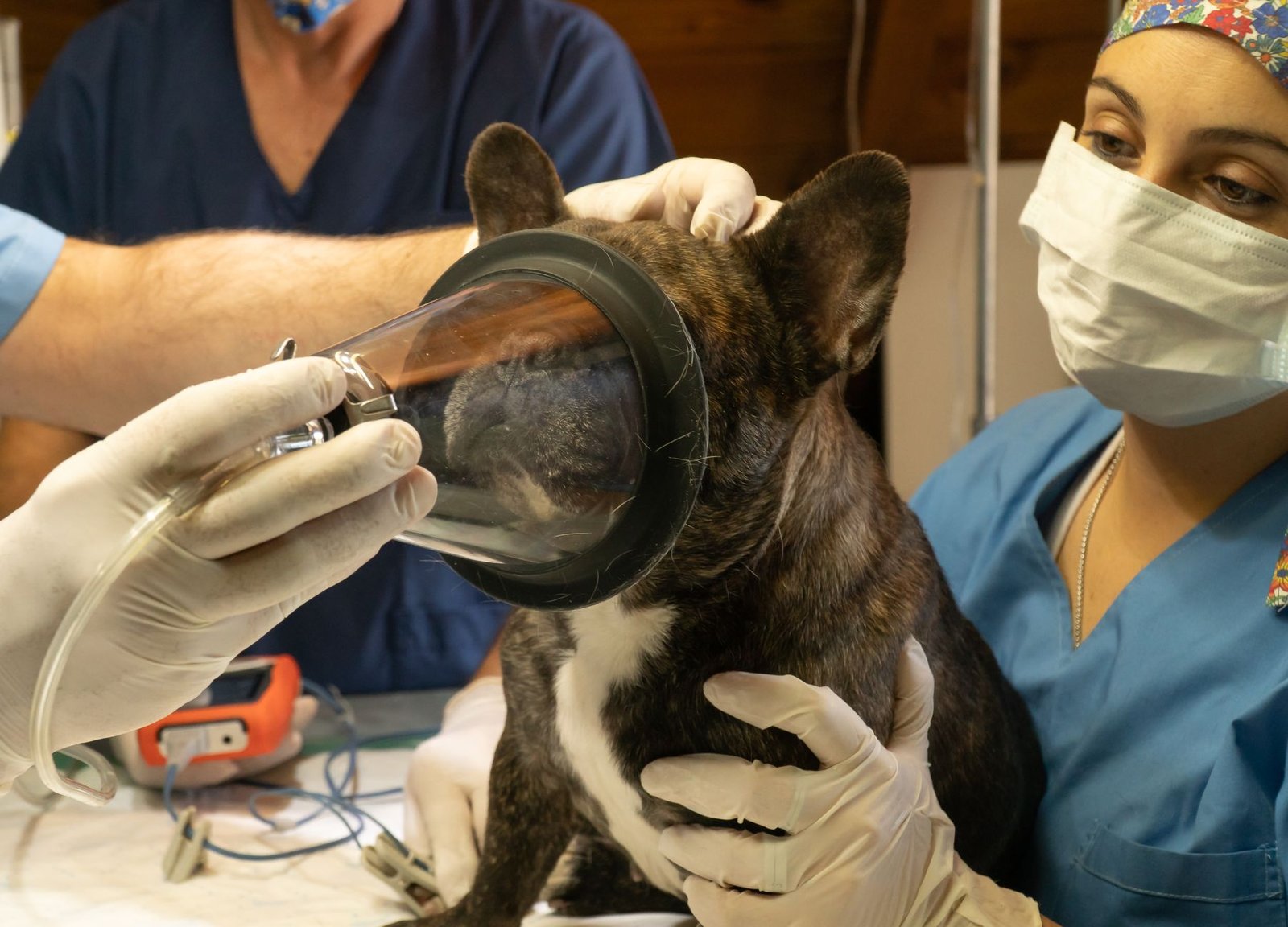
Anesthesia has also changed considerably. Modern protocols are tailored to the patient rather than standard, many of the agents used are short-acting and some can be reversed, and the monitoring during the procedure tracks heart rhythm, blood pressure, oxygen levels, carbon dioxide and temperature continuously. Much of the risk that gave anesthesia its reputation decades ago sat in things we now watch and correct in real time.
What we check before saying yes
A pre-anesthetic workup is not a formality. It changes the plan in a meaningful proportion of older patients, and occasionally it changes the answer.
- A thorough physical examination, including listening properly to the heart and lungs. A murmur found here is a common reason we pause and investigate further.
- Blood work. Kidney and liver function determine how the body will process the agents, and anemia or a low platelet count changes everything.
- Blood pressure, which matters particularly in older cats.
- Imaging where indicated, chest radiographs especially if there is a murmur, a cough, or a reason to look for anything that has spread.
- A conversation about what else they are taking, because some things need adjusting beforehand.
Our in-house laboratory and imaging run that workup, and where something turns up we stabilize it first rather than proceeding anyway. That is what a pre-anesthetic assessment is for: not to produce a yes, but to produce an accurate yes or an informed no.
The cost of the other decision
This is the part that gets left out when age is used as the reason to decline.
A mouth full of painful dental problems does not stop hurting because the animal is fifteen. A lump that is growing does not stop growing. Pets are extremely good at concealing chronic pain, and owners very often describe an animal who seems years younger after a dental procedure they had been putting off because of age. The thing they were protecting the pet from was a few hours of carefully monitored sleep; what they were leaving in place was months of discomfort.
The honest framing is a comparison, not a veto: the risk of the procedure against the cost of the condition continuing, over the time that animal realistically has.
How we lower the risk on the day
- A dedicated person watching the patient, whose only job is monitoring.
- Intravenous fluids throughout, supporting blood pressure and organ perfusion.
- Active warming, because older and smaller patients lose heat fast and cold patients recover badly.
- Pain relief given before the painful bit, not after, which reduces how much anesthetic is needed at all.
- A protocol built around that patient’s bloodwork, not a standard one.
- Supervised recovery, which is the single riskiest stretch and where a large share of problems actually occur, kept warm and quiet.
Our surgical team runs that monitoring on every patient regardless of age, and our medical services cover the stabilizing beforehand and the recovery afterwards.
Our hours
We are open Monday to Saturday from 8:00 am to 8:00 pm, and Sunday and statutory holidays from 8:00 am to 6:00 pm.
Planned procedures are booked, so our hours cover this comfortably. If an older pet is in distress, breathing badly, collapsed or bleeding when we are closed, that is not a scheduling question: go to an open emergency hospital. The one we refer to is Mainland Animal Emergency Clinic, (604) 588-4000.
Common questions
My vet found a heart murmur. Does that rule out anesthesia?
Not by itself. It means we want to know what is causing it and how the heart is coping, usually with imaging, before deciding. Plenty of pets with murmurs are anesthetized safely with an adjusted protocol.
Is pre-anesthetic blood work really necessary, or is it an upsell?
In an older patient it genuinely changes decisions. It regularly alters the agents we choose, and occasionally it stops us proceeding that day.
Can my pet have a dental without a general anesthetic?
Anesthesia-free dental cleaning only addresses what is visible above the gumline, which is not where the painful problems are. It also cannot take radiographs or extract anything. For an animal with actual dental pain it is not an alternative.
What is the recovery like for an older pet?
Usually slower than for a young one, with more grogginess for the first day or two. Most are back to themselves within a few days.
Should I fast my pet beforehand?
Follow the instructions we give you rather than a general rule, because they differ by species, age and condition, and some patients should not be fasted at all.
Speak to the team at Latimer Animal Hospital
If a procedure has been put off because of your pet’s age, book an assessment and let us tell you what the actual risk is for your animal. Age on its own is not the answer to that question.
Published by the team at Latimer Animal Hospital.
This article is educational in nature and is not a replacement for hands-on assessment of your own pet by a veterinarian.
Latimer Animal Hospital
19885 76 Avenue, Unit 215, Langley, BC V2Y 4M5 (Willoughby)
Phone: (236) 473-0375
Hours: Monday to Saturday 8:00 am to 8:00 pm; Sunday and statutory holidays 8:00 am to 6:00 pm